The first time I enjoyed a team of complete strangers reach the ranch, shoulders high and eyes down, I understood we would start with breath, not speak. The horses were already grazing in the lower field, snapping their ears at the wind. Within mins of stepping through eviction, people searched for. Equines do that to us. They request presence without words, and they do it kindly. What takes place following is what I call belonging based training, a means helpful people discover steadiness inside themselves while standing in actual partnership with animals, land, and each other.
Belonging appears soft till you understand how difficult it is to feel like you truly belong in your own body, on a group, or with your family when stress, trauma, or a busy mind has been running the program. On the ranch, we construct that ability action by concrete step. We do it with therapeutic horsemanship and equine-assisted solutions that put connection at the facility, abilities in actual contexts, and neighborhood around the edges for security. Some individuals come for equine-assisted training around leadership or interaction. Others arrive looking for equine-facilitated health, especially when talk-only techniques have stalled. We likewise run experiential discovering with equines for schools and offices, and we work together on team structure with horses for firms that would rather trade another meeting room for a pair of curious eyes and 4 stable hooves.
What it suggests to coach for belonging
Coaching for belonging means the objective is not simply understanding, it is combination. People discover what they really feel, what they require, and exactly how to align their actions with their worths, after that they attempt it in a living system where feedback is sincere. Horses align to clearness and authenticity. They disengage from blended signals, and they soften when we soften. That is the coaching arc in miniature.
I keep two concerns before me during sessions. Initially, what helps he or she really feel safe adequate to appear truthfully. Second, what makes it most likely they will certainly practice this skill at home, job, or school. We map sessions to daily life. If a parent is discovering to set limitations without shame, we practice routing a horse in a round pen with borders that are clear and kind. If a manager battles to delegate, we set up a short course with cones and ask a small group to get a steed from factor A to factor B without touching the rope, which forces nonverbal control and trust fund. The horse multiplies the lesson by mirroring the group's real comprehensibility, not their mentioned plan.
Belonging likewise means broadening the circle. Some days one of the most healing hour gets on the barn aisle, cleaning an equine along with a retired next-door neighbor who understands every knot in the hay web. Shared work, light conversation, the rhythm of a soft brush on a thick winter layer, these are not side tasks. They are the dirt that feeds change.
Why horses
Horses are prey pets that survive by attuning to their environment. They check out micro-movements and physiology in such a way human beings often bypass. That sensitivity is not mystical, it is practiced. When somebody with anxiousness strolls up, breath high and shallow, an equine may raise its head or step back. If that same individual changes to a slower exhale, softens their eyes, and grounds with their feet, the equine typically mirrors that regulation by reducing its head, licking and eating, or shutting its eyes. The psychophysiological feedback is prompt and nonjudgmental.
Their size matters as well. You can not fake a feeling of control beside a 1,000 pound partner. You need to discover it, then communicate it with clearness and respect. That reality helps people rectify their assertiveness. A teenager who has been called bold can learn to claim area without aggression. A peaceful adult can trying out volume and direction and realize tranquil management does not imply tiny leadership.
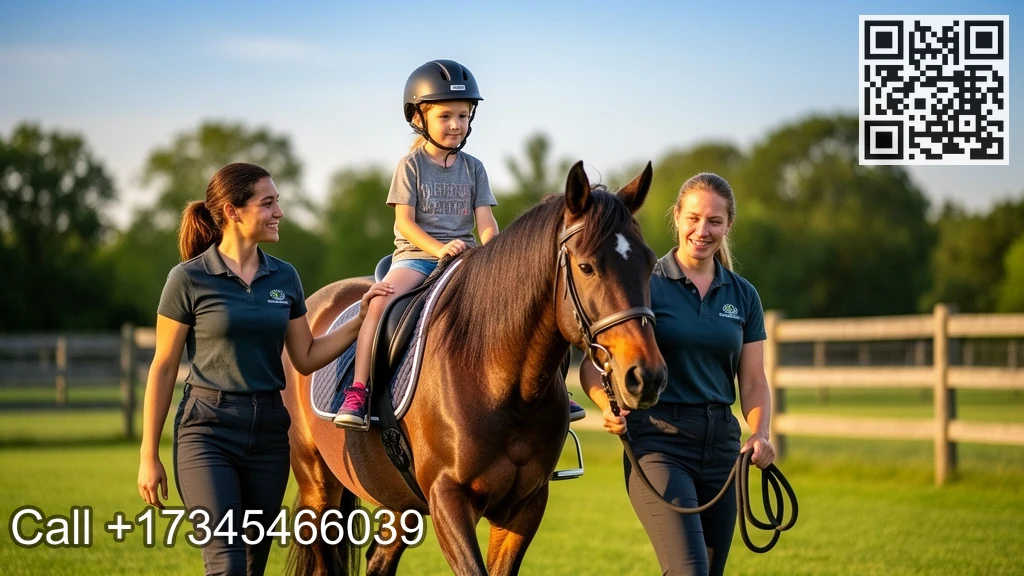
I rely upon steeds due to the fact that they carefully collapse the range in between what we think we are doing and what we are in fact doing. They brighten strengths we disregard and shine light on practices that need attention. And they do it in a field that scents like yard, not a fluorescent space that smells like stress.
A morning on the farm
By 8:30 a.m., the herd has submitted below the upper area to the catch pen. We greet each horse, halter those arranged for sessions, and permit others to wander back to forage. A volunteer spreads hay in slow-moving feeders, a little detail that establishes a calm tone. Clients trickle in by the hour. We maintain the schedule roomy, since rushing damages attunement.
One recent early morning, I dealt with a 12-year-old that has ADHD. He battles most with shifts and impulse control at college, where a hold-up in instructions develops into a burst of movement that obtains him in trouble. We established a 20-minute job: lead our Haflinger mare with a pattern, pause at cones, after that back 3 steps. I offered him a clicker to mark his own stops before asking her to pause. The pairing changed everything. His best session took place when he exercised a half-second pause, clicked, after that asked. The mare mirrored him cleanly. He finished the pattern with a smile that got to both ears. That is ADHD equine finding out support at work: realtime comments, a physical support for timing, and a partner who does not take actions personally.
Right after, a grown-up customer came for anxiety support with steeds. We remained outside the pen. She stood with one foot on the rail, one on the ground, and tracked her breath while naming what she noticed in the field. Her homework was to exercise the same position on her front action twice a day. A month later she said this was the very first time in years she might feel her heart beat slow without medications. The cattle ranch did not heal her anxiousness. It offered her a repeatable, somatic entrance to regulation.
What a session looks like
Every program runs differently, yet this is the core circulation I utilize for equine-assisted tasks and equine-facilitated mentoring. It is not stiff. We adjust for age, goals, season, and energy.
- Arrival and orientation. We stroll the room, testimonial authorization and hints, verify boundaries, and pick an equine together based on the day's aims. Groundwork first. We begin on the ground unless there is a strong restorative reason to ride. Skills consist of leading, producing hindquarters, support, and standing in common stillness. Focused technique. We include a basic obstacle that fits the mentoring goal, such as routing through cones, freedom operate in a tiny pen, or a grooming sequence with a particular interaction cue. Reflect and web link. We debrief with concrete language. What did you discover in your body. What did the equine do when you breathed out. Where does this show up in your home or work. Close and treatment. We close with three great strokes of a soft brush, offer the horse a minute to release, and return tack nicely. Care routines matter. They instruct completion.
On group days, this circulation scales. Groups turn through terminals, and we keep jobs brief so energy stays high. In team structure with horses, I frequently appoint one person as the onlooker who can not talk, just record. Their notes come to be gold when we review whose voice filled up the room and whose did not.
Ethics, safety and security, and scope
Good ranches do not deal with steeds as tools or people as jobs. They hold a solid safety and security culture and a clear scope of practice. Our method blends restorative horsemanship with mental wellness methods, however we are not a hospital. When customers need medical oversight, we collaborate with accredited companies. When the work is coaching as opposed to therapy, we mark that clearly and avoid wandering into locations ideal managed by a clinician.
We display for warnings. Fresh head injuries, unrestrained seizures, and severe psychosis are not suitable for this setup. We look for allergies, background with pets, and substance make use of that might harm safety. We also ask about what assists somebody calm down and what does not, after that we construct from there.
Horses need care too. Procedure should not overload a sensitive gelding or put a green mare in a management role she is not all set for. We rotate horses, give them downtime, track their weight and hooves, and pay attention to our wranglers when they claim a steed is tight or irritable. That is not superstition, it is data from people who review the herd daily.
Somatic discovering, not just talk
I love language, yet bodies learn best by doing. Somatic recovery with equines turns up in the tiny moments. A cyclist notices her jaw and stomach soften when she matches the horse's walk. A male with a trauma background feels his spine extend when he discovers a clear indeed in his lead rope as opposed to a tugged command. These are not one-off wonders. They are repetitions that construct brand-new patterns. Study on heart price variability and co-regulation sustains what we see at the rail: when a person resolves, an equine usually clears up, and the relationship itself comes to be a regulator.
We name feelings and activities, not simply ideas. We seek what is way too much and what is insufficient. We strangle strength by transforming distance from the steed, adjusting jobs, or moving from the open area to a smaller sized space. Somatic abilities travel. A client who finds out to stop briefly and feel her feet before asking an equine to move can make use of the same cue prior to going into a difficult meeting.
Neurodiversity and sensory needs
People on the range and those with sensory processing differences frequently prosper on ranches, supplied we integrate in predictability and selection. Our autism equine discovering program keeps the initial go to short, 30 to 45 mins, and stresses a clear path: car park to gateway to brushing bay to pasture, with aesthetic supports. Some clients favor to start fifteen feet from the herd and work their means closer over weeks. We never force touch. Touch taxes some nervous systems. Plenty of discovering occurs merely by enjoying a horse take a breath and determining soft eyes, level head, or swishing tail.
Alternative therapy for sensory difficulties does not imply deserting proof. It indicates basing approaches in what we understand concerning law. For instance, we may use larger brushes and a consistent brushing rhythm to supply proprioceptive input, then change to leading in a peaceful edge so there is one audio at a time. Numerous parents report that transitions home go smoother after sessions when we end with a foreseeable routine, like returning a hoof pick to the same hook and swing farewell at the exact same fencepost. Little rituals carry a lot of weight for sensory systems.
ADHD equine finding out assistance looks various. We lean right into movement and timed tasks, like a 90-second emphasis drill with a clear begin and quit. We reduced verbal directions in fifty percent and demonstrate initially. We use natural consequences, not shaming. If a customer races ahead, the horse delays. If a client reduces and breathes, the horse commonly complies with. The lesson writes itself.
Anxiety, despair, and the long tail of stress
For several grownups, stress and anxiety seems like living one action in advance of impact. Equines insist we land where our feet are. Sessions for stress and anxiety support with steeds typically start outside the fencing and move in as a person's system allows. We match breath collaborate with positioning. Want to capitals. Notice that dark bay with the white snip. Feel your left heel. Horses are professionals at titration. When you flooding your system, https://shanenjcc779.theburnward.com/brave-beginnings-therapeutic-horsemanship-for-individual-development they step back. When you pendulate between tension and convenience, they hang in.
Grief requests for time. I have dealt with clients months after a loss that could not cry before household but found tears eloping while currying a pony that stalled like an anchor. The cheek pressed to a warm shoulder is not a treatment. It is a place to rest while your body does what it knows just how to do.
Leadership and teams that really listen
Workshops on interaction land in different ways when your coworker is a steed. In equine-facilitated coaching for companies, we stay clear of metaphors that do not map. We offer groups jobs that emphasize their usual behaviors. If a team leans on the same two loud voices, we design an exercise where those 2 can not speak. If the group prevents dispute, we established a selection point where they need to choose a couple of gates. Enjoying a group relocate a horse with a narrow space reveals you everything about their decision hygiene.
The ideal days finish with people observing they relied on a person they usually avoid, or they discovered a means to support a quieter member's concept because the steed plainly responded far better when directions were concise. These sessions do not change approach work. They condition the muscles that strategy depends on.
The neighborhood layer
The ranch is not just a solution website. It is a little area. Volunteers clean tack and pile hay. A neighborhood institution's life skills course comes when a week to fill up waters and comb the minis, and they own those work with satisfaction. A mother who began by enjoying from her automobile now runs the treat table. Individuals fulfill at fencing lines, and those conversations matter.
We host open barn early mornings regular monthly. No charge, no schedule. You can sit on a hay bundle and drink coffee while the herd mills. Belonging grows where there is space to be without fixing. Parents of youngsters in our autism equine discovering program usually trade practical pointers on shoes that can handle mud and class supports that actually assistance. Teenagers from our summertime mate come back to show brand-new kids just how to link a secure knot. This cross-pollination is part of the medicine.
Measuring what matters
Soft results are genuine, but we still track what we can. Presence prices say a lot. If a person who has stayed clear of groups turns up 8 out of ten times, that is motion. We use simple pre and post check-ins on stress, confidence, and connection. We request for one concrete change in the house or work and adhere to up within 30 to 60 days. For groups, we view whether strategies obtain more clear and quicker across sessions. For individuals, we track exactly how usually a client can reset within a session and the length of time it takes.
We also count equine indicators. A herd with lower cases of pinned ears, anxiety yawns, and tail wringing during sessions is a herd with proper workload and excellent human pairing. Information is moist here. It is the story of what is working.
Cost, accessibility, and sensible expectations
Equine-assisted solutions need land, pets, and qualified team. That elevates expenses. We balance out with scholarships, grants, and a moving scale, and we partner with area companies to fund mates. Insurance policy occasionally covers sessions when billed under mental health solutions, however insurance coverage differs widely. Many households blend much shorter mentoring obstructs with home practice to stretch dollars. We are transparent about this due to the fact that incorrect hope erodes trust.
Progress is hardly ever straight. Some customers rocket forward in the initial four weeks, then struck a plateau. Others need 6 to eight sessions before anything clicks. We set assumptions in varieties, like six to twelve weeks for a clear shift in self-regulation skills, with the alternative to stop and return. Steeds educate patience by just being horses.
Edge situations and thoughtful workarounds
Not every person suches as horses. Some are sensitive. Others have actually concern rooted in a bad fall or a frightening flick. We deal with that. Procedure can take place outside the fencing, or with minis who stand knee-high, or entirely on the ground without any riding. For clients with bronchial asthma during hay season, we set up early and work far from the barn aisle. If fear is the major mentoring subject, we make the equine the context, not the target. The win is not touching a nose. The win is recognizing your signals and deciding that values them.
Trauma histories need great treatment. Dissociation is common. I expect glassy eyes and lengthy blinks, after that slow the session and anchor sensation. We keep permission active, not locked in a kind. If a customer starts to override themselves to please me or the team, we quit. That versions the sort of belonging that does not demand self-abandonment.
How to pick a great program
A shiny site is not evidence. These checkpoints will certainly help you vet an equine program prior to you commit.
- Clarity on extent. They can clarify whether they supply equine-assisted mentoring, equine-facilitated health, or restorative horsemanship, and which team hold which licenses. Horse-first methods. Ask about herd turning, rest days, and just how they determine which horse deals with whom and why. Safety that is tranquil, not rigid. They ought to cover safety helmets, gates, and emergency strategies without terrifying you right into compliance. Measurable goals. They will certainly aid you name 2 or 3 concrete aims and just how they will certainly track them. Fit and authorization. They invite you to try a session, after that determine, and they value no without pressure.
Through the seasons
Spring experiences high. Horses dropped wintertime layers like clouds and youngsters race to see who can make the greatest stack of soft hair. We established shorter programs since energy runs wild. By summertime, the herd stretches in the color and sessions reduce. We trade midafternoon heat for early mornings, and every person finds out to review a horse that says, no thanks, it is as well warm to assume. Fall brings crisp air and the very best working days. Individuals enter their learning with steadier feet. Wintertime is for silent foundation in the interior or lengthy strolls along the fence line, wrapped in woollen with breath hanging like haze. The work adjustments with the weather, which seasonality steadies individuals that have felt like life is one long fluorescent hum.
What changes when belonging takes root
Belonging based mentoring is not about understanding a horse. It is about finding stable ground inside on your own, then relating cleanly to a world that does not constantly fulfill you midway. I have actually enjoyed a 9-year-old who thawed down at institution come to be the kid that reminds others to breathe prior to leading a horse right into the field. I have actually watched a team that sniped in email begin to ask far better questions face to face because the steed rejected to move when they discussed each other. I have watched a papa that had actually not embraced his kid in years groom a draft steed together with her, and word by word, brush stroke by brush stroke, they uncovered exactly how to be alongside each other.
The ranch does not fix individuals. It welcomes them to come from themselves, per various other, and to a landscape that keeps truthful time. Equines fulfill us where we are, and if we listen, we find out to do that for one another. That is the heart of equine-facilitated mentoring, and it is the factor I still pull on sloppy boots with a smile prior to sunrise.